Older homes
Is it safe to clean the original ductwork in an older Rochester home?
Often it is, as long as the system is checked first. Look for damaged, crushed, or disconnected runs and for old wrap, tape, or insulation that could contain asbestos. The EPA says asbestos-containing materials should not be disturbed except by specially trained contractors, so have anything suspicious tested by a trained, qualified asbestos professional before cleaning.
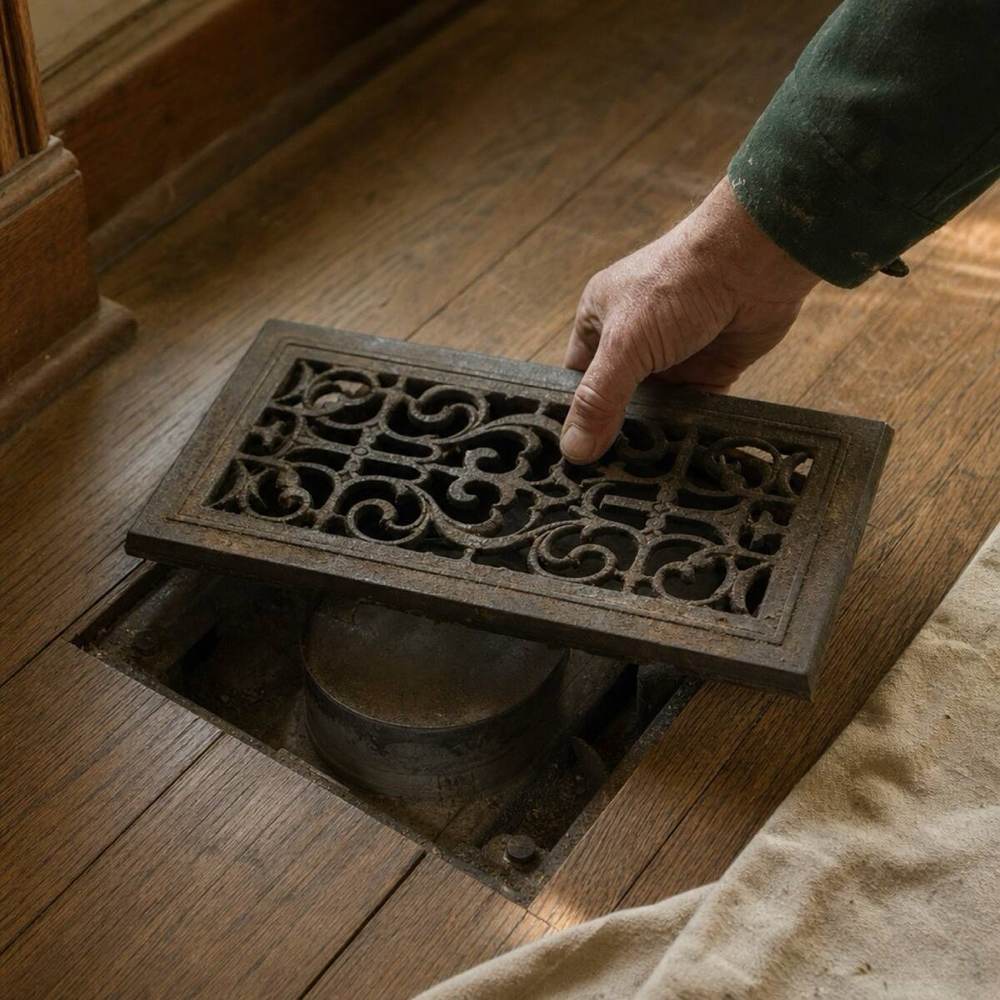
What to check before cleaning older ductwork
In an older house or farmhouse, ducts may have been added to, patched, or rerouted over the years, and there is often no record of what was used. Before anyone cleans them, look over what you can see in the basement, crawl space, and utility room:
- How old the system is. If the furnace or ducts came with the house, treat every material on them as unknown until someone qualified has looked.
- Damaged, disconnected, or crushed runs. Rust, holes, joints that have pulled apart, and ducts that have been stepped on or squeezed should be repaired by a heating and cooling contractor before cleaning, not during it.
- Old tape, wrap, or paper. The EPA lists pipes covered with an asbestos blanket or tape, and oil and coal furnaces with asbestos insulation, among the places asbestos may be found in a home.
- Insulation on or in the ducts. The EPA names insulation and register boots as parts of the heating and cooling system to check for asbestos before cleaning.
If you suspect asbestos, leave it alone
Do not scrape, cut, sand, sweep, or tape over anything you think may contain asbestos. The EPA says asbestos-containing materials that are not damaged or disturbed are not likely to pose a health risk, and that sampling done incorrectly can be more hazardous than leaving the material alone. Have suspected material tested and handled only by a trained, qualified asbestos professional. A duct cleaning company is not the right business for that work, and neither are we.
Why a camera inspection makes sense first
Much of an older system runs behind walls, under floors, and above ceilings, where you cannot look in. The EPA notes that many sections of a heating and cooling system may not be accessible for a visible inspection. A small camera fed into the ducts can show loose joints, crushed sections, debris, and old wrap before any brush or vacuum touches them, so problems turn up before the cleaning instead of in the middle of it.
Questions to ask a duct cleaner
- Will you look inside the system before cleaning and show me what you find? The EPA suggests asking providers to show you the contamination that would justify cleaning.
- What do you do if you come across material that might contain asbestos? The right answer is to stop, leave it alone, and tell you to have it tested.
- Have you worked on systems like mine? The EPA suggests checking that providers are experienced and have worked on systems like yours.
- Do you follow NADCA's air duct cleaning standards? The EPA lists this among the things to confirm.
- Will I get the total amount and scope of the job in writing before work begins? The EPA recommends a written agreement that covers both.
Related questions
Can duct cleaning disturb asbestos?
It can if the work reaches material that contains asbestos. The EPA says to inspect the system before cleaning to be sure there are no asbestos-containing materials, such as insulation or register boots, because those materials should not be disturbed or removed except by specially trained and equipped contractors.
How can I tell if old duct tape or wrap contains asbestos?
You usually cannot. The EPA says you generally can't tell whether a material contains asbestos simply by looking at it, unless it is labeled. It recommends that a trained, qualified asbestos professional take any samples, and it does not recommend taking samples yourself.
Does old asbestos material always have to come out?
Not always. The EPA says the best thing is usually to leave asbestos-containing material alone if it is in good condition. It also says removal and major repair should be done by people trained and qualified in handling asbestos.
What if the insulation on my ducts is wet or mold-affected?
The EPA says wet or mold-affected duct insulation cannot be effectively cleaned. It should be removed and replaced by a qualified heating and cooling system contractor, and the leak or water problem behind it should be fixed.