Honest answers
Why is my house so dusty, and are the air ducts to blame?
Household dust has many sources, including people, pets, fabrics, and outdoor air, and dirty ducts are only one of them. The EPA notes that much of the dirt in air ducts adheres to duct surfaces and does not necessarily enter the living space. Still, a few signs point to the ducts, so check them first.
Where does household dust usually come from?
Dust is a mix. Skin and hair from people and pets, fibers from carpets, bedding, and clothes, and soil and pollen carried in on shoes or through open windows all add up. Cooking and everyday activity add more. The EPA says dirty air ducts are only one of many possible sources of particles in homes, and that much of the dirt in air ducts adheres to duct surfaces and does not necessarily enter the living space.
How can you tell if the ducts are part of it?
A few signs point at the ducts rather than the rooms:
- Dust or debris puffs out of a register when the blower starts.
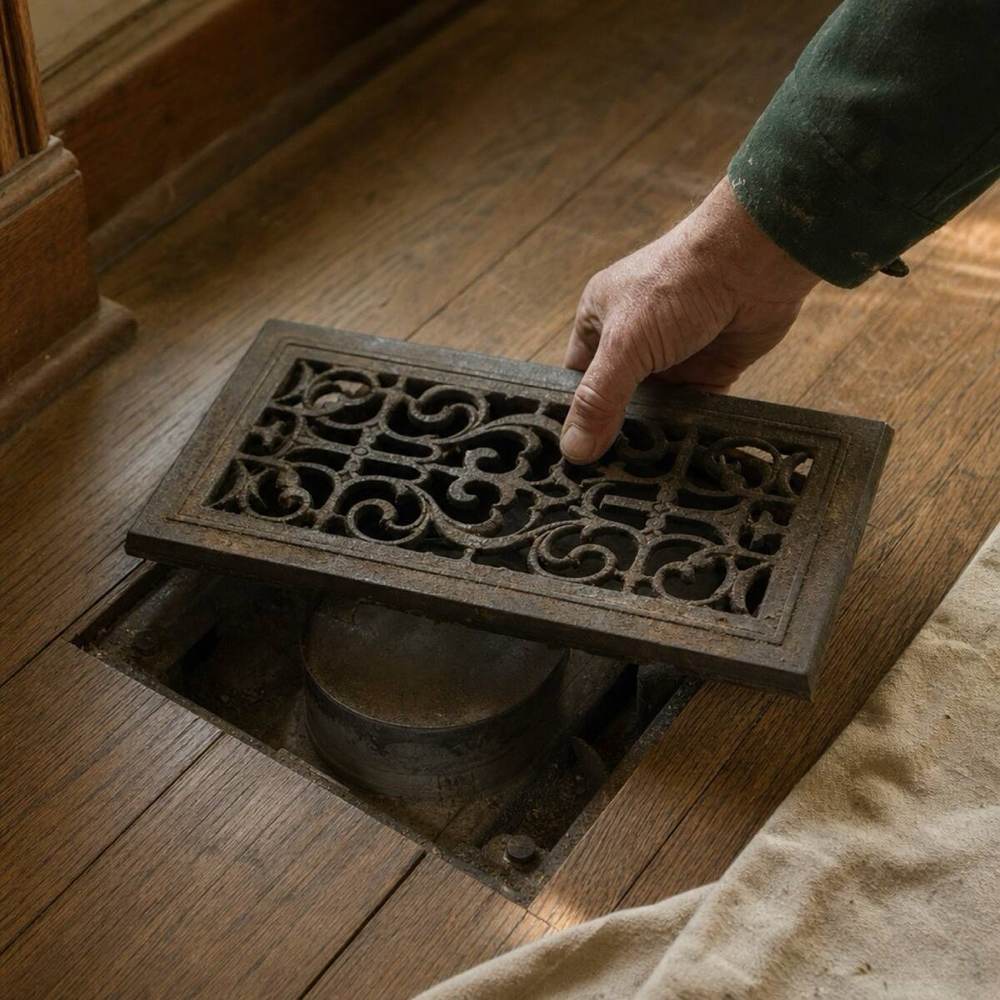
- You can see debris or buildup inside a register when you lift the cover.
- Dust got much worse after a renovation or construction work in the house.
- The furnace filter does not fit its slot, so air slips around it.
The EPA says to consider cleaning if particles are actually released into the home from the supply registers. For more signs, see How can you tell if your air ducts need cleaning? and Why are there dark marks around my air vents?
What simple things cut dust?
Start with the filter. The EPA advises using the highest efficiency air filter recommended by the manufacturer of your heating and cooling system, and changing filters regularly. Our guide to furnace filters and duct dust goes further. Beyond that, plain housekeeping helps:
- Seal any gap around the filter slot so air does not bypass the filter.
- Dust with a damp cloth so dust is picked up rather than pushed back into the air.
- Vacuum with a machine that has a good filter, so fine dust is not blown back out.
- Close windows on dry, windy days.
When is a duct cleaning or a camera look worth it?
The EPA says to consider cleaning if there is substantial visible mold growth inside hard surface ducts, if ducts are infested with vermin, if they are clogged with excessive amounts of dust and debris, or if particles are actually released into the home from the supply registers. If you are not sure what is inside, a camera inspection lets you see before you decide; see camera inspections. If you do decide to clean, air duct cleaning is described on our services page, and this guide covers renovations, pets, and winter. Tell us what you have noticed and a real person will reply.
Related questions
Do dirty air ducts cause a dusty house?
The EPA says dirty air ducts are only one of many possible sources of particles in homes, and that studies have not conclusively shown that dust levels in homes increase because of dirty ducts.
Does the dirt in my ducts end up in my living space?
The EPA says much of the dirt in air ducts adheres to duct surfaces and does not necessarily enter the living space.
Which furnace filter should I use to cut dust?
The EPA advises using the highest efficiency air filter recommended by the manufacturer of your heating and cooling system, and changing filters regularly.
When does the EPA say duct cleaning makes sense?
The EPA says to consider cleaning if there is substantial visible mold growth in hard surface ducts, if ducts are infested with vermin, if they are clogged with excessive amounts of dust and debris, or if particles are actually released into the home from the supply registers.