Honest answers
How long can a dryer vent be?
Under the International Residential Code most U.S. homes follow, a 4-inch dryer exhaust duct may run up to 35 feet. Each bend shortens that: about 5 feet for a 90-degree elbow and 2.5 feet for a 45-degree elbow. The exception is a length the dryer manufacturer's instructions allow.
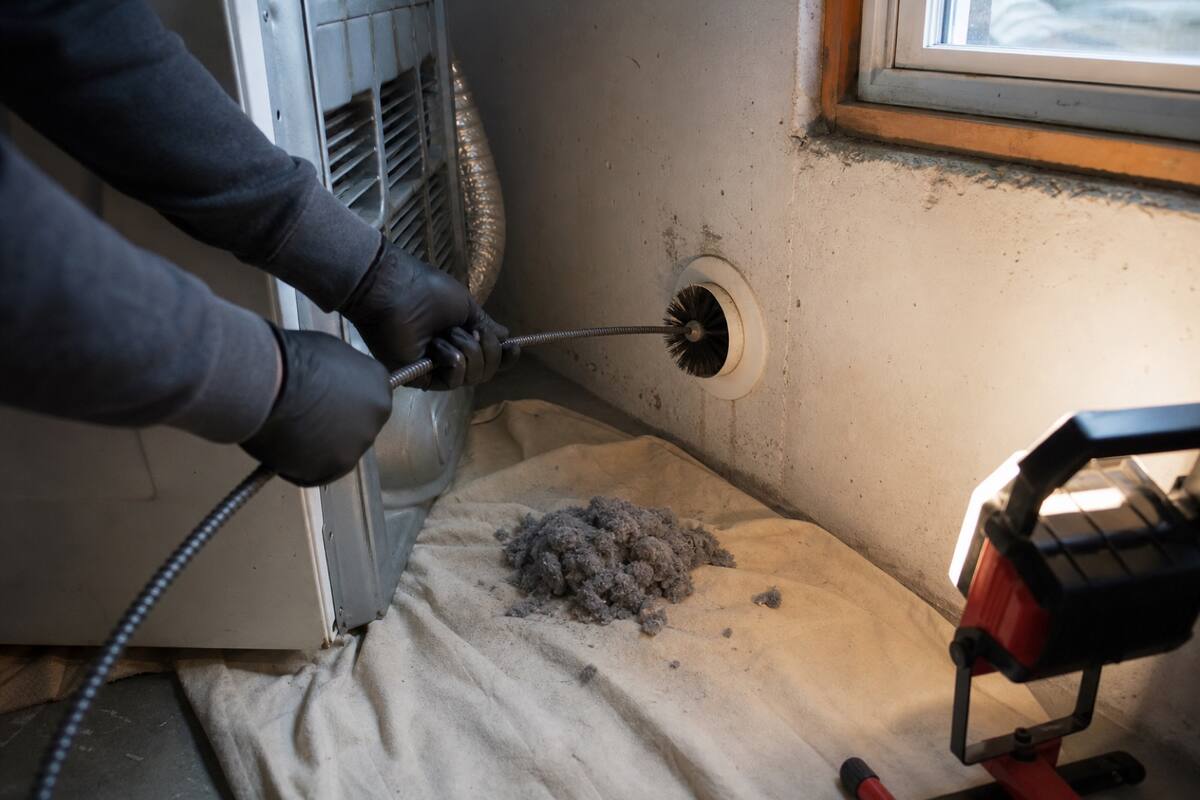
How do you measure your dryer vent run?
Measure the developed length: the path the air actually travels, from the dryer's transition connection to the outside hood. Follow the duct with a tape measure along every straight section and add them up.
Then count the bends. Under the fitting table in the International Residential Code (table M1502.4.5.1), a 90-degree elbow takes about 5 feet off the allowed length, and a 45-degree elbow takes about 2.5 feet. Most U.S. residential codes follow the same 35-foot starting point for a 4-inch duct, but a dryer's installation instructions can set a different limit and your local building official has the final word.
What does a worked example look like?
Say the vent has 20 feet of straight pipe and two 90-degree elbows. Each elbow counts as 5 feet, so the equivalent length is 20 + 5 + 5 = 30 feet. That is under 35 feet, so it fits the default limit. Add a third 90-degree elbow and it becomes 35 feet, right at the limit with no room to spare. Two 45-degree elbows count as 5 feet together, the same as one 90, so the sums matter.
If you only have a rough idea of the layout, a camera look can show what the run is doing, including sags where lint can collect.
Why do long dryer vent runs matter?
Moist, lint-laden air has to travel the whole distance. The longer or twistier the run, the more lint settles on the walls and at each bend, and the harder the dryer has to work to push air out. The result is slow drying, a hot laundry room, and a lint buildup that can become a fire risk. The U.S. Fire Administration lists clothes dryers among the preventable causes of home fires and urges regular cleaning of the vent. If your loads already take more than one cycle, read why a dryer takes so long to dry.
Is a basement laundry different?
It can be. In many Rochester homes the washer and dryer sit in the basement, and the vent has to cross the basement ceiling to reach a rim joist before it exits the house. That is often a long horizontal run with a bend up and another out, so it is worth measuring rather than guessing. Look at the outside hood in winter too; our guide to ice and frost on a dryer vent explains what you may see there.
What should you do if your vent is too long?
Start with the dryer's installation instructions, which may allow a longer run than the default. If yours is still over the limit, the fix is a design change: shortening the run, removing bends, or relocating the dryer. Booster fans exist, but they must be listed equipment installed by a qualified installer. Rerouting a vent is work for a qualified installer or heating contractor, and we do not do it. Also check the material in the run: our guide to which dryer vent duct is safe covers foil, vinyl and rigid metal.
What we can do is clean the run and show it on camera, so you and your installer can see the layout and the lint. See dryer vent cleaning or tell us about your vent.
Why do long runs need cleaning more often?
Every extra foot and every elbow is another place for lint to settle, and a long run loses airflow sooner than a short one. Our guide on how often a dryer vent should be cleaned gives the usual yearly schedule; with a run near the limit or a basement route full of bends, check sooner, especially if drying times creep up.
Related questions
Is 35 feet the maximum length for every dryer vent?
No. Thirty-five feet is the default under the International Residential Code, measured with bends deducted. A dryer manufacturer's installation instructions can allow a longer or require a shorter run, and your local building official has the final word.
How much does an elbow take off the allowed dryer vent length?
Under the IRC fitting table, a 90-degree elbow counts as about 5 feet and a 45-degree elbow as about 2.5 feet. Add those to the straight run to get the equivalent length, then compare it with the limit.
Do I measure the dryer vent from the wall or from the dryer?
From the dryer. Measure the developed length from the dryer's transition connection, the point where the vent duct begins, all the way to the outside hood.
Can a longer dryer vent run be fixed with a booster fan?
Sometimes, but that is a design change rather than a cleaning job. Booster fans must be listed equipment and installed by a qualified installer who follows the dryer's instructions. Rerouting a run is contractor work.
Does a long dryer vent need cleaning more often?
Usually, yes. More length and more bends give lint more places to settle, so airflow drops sooner. If clothes take longer to dry, check the vent sooner than the usual yearly schedule.