Honest answers
What kind of dryer vent duct is safe: foil, vinyl, or rigid metal?
The run inside walls, ceilings, and floors should be smooth rigid metal duct, usually 4 inches wide. A short flexible metal transition duct, listed for the purpose and kept short, may connect the dryer to it. White vinyl and thin foil accordion hose trap lint and are not appropriate for a dryer.
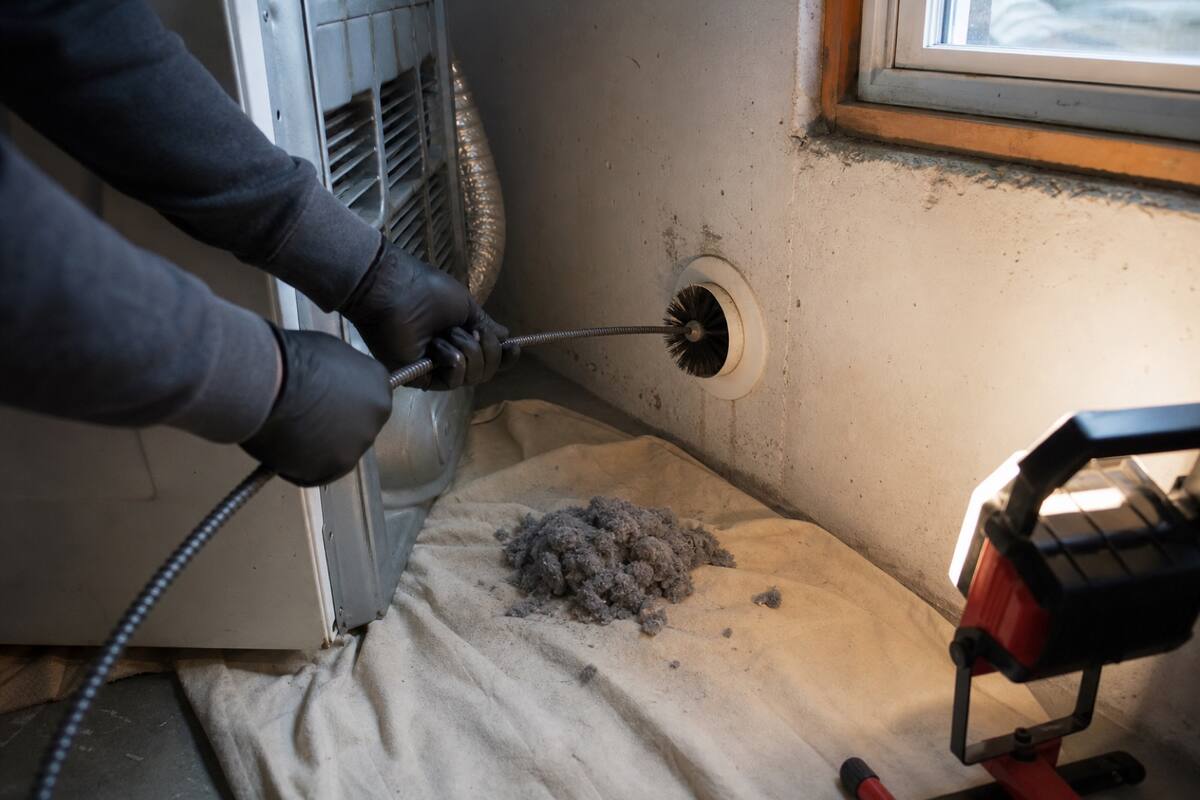
Why does the duct material matter?
A dryer pushes warm, damp air and fine lint through the vent every load. The filter catches most of the lint, not all of it. What gets past settles wherever the duct gives it something to hold on to. Ridges, sags, and rough seams catch lint, and lint slows the air. Slow air means longer drying times and a hotter dryer, and lint is fuel. That is why fire-safety agencies keep returning to the duct. Our guide to dryer vent fire warning signs covers what a clogged run looks like.
Material also matters because the vent has to survive its surroundings. A long run through an unheated basement ceiling or an exterior wall in a Rochester winter is cold, and damp air cooling in a duct leaves moisture behind. A smooth duct sheds that moisture and lint more easily than a ridged one.
What is the difference between rigid, semi-rigid, foil, and vinyl duct?
- Rigid metal duct. Smooth, stiff pipe, usually 4 inches across. It gives air the easiest path and lint the fewest places to catch. This is what most U.S. residential codes, based on the International Residential Code, expect for the hidden run.
- Semi-rigid metal duct. Corrugated metal that bends. The U.S. Consumer Product Safety Commission names it, along with rigid duct, as the better replacement for plastic or foil accordion duct. It has ridges, so it holds more lint than smooth pipe and is best kept short and straight.
- Thin foil accordion hose. Cheap, flimsy, and ridged. It traps lint and is easily kinked or crushed.
- White vinyl hose. Plastic accordion hose has the same lint-catching ridges and is not appropriate for dryer exhaust.
Your dryer's installation instructions say what the manufacturer specifies. Follow them, and follow your local building code.
What about the short connector behind the dryer?
The dryer sits a few inches from the wall, so the last stretch usually needs some flex. A flexible metal transition duct that is listed for dryer use can do that job. Keep it as short as the setup allows, and do not run it through or hide it inside a wall, ceiling, or floor. The hidden run should be the smooth rigid duct. It is not a reason to use a long length of flexible hose.
How should the joints be made?
Sections of duct are normally joined and sealed with foil tape. Avoid screws that poke into the airflow. The screw tips act like hooks, and lint wraps around them and builds up from there. If you see screw tips inside a vent run, mention it to the installer who looks at it.
How can you tell what you have?
Switch the dryer off and unplug it. Slide it out gently and look at the connector on the back. Then trace the run. In many Rochester homes it drops into the basement ceiling or crosses a laundry-room wall to an outside hood. Ridged, thin, and soft material is accordion hose. Smooth, stiff, dull-gray metal is rigid duct. Much of the run is often out of sight, and that is where a camera inspection helps.
What should you do if you have foil or vinyl duct?
Replacing it, or rerouting it, is work for a qualified installer or heating contractor, who can also check the length, the number of bends, and the outside hood against your dryer's instructions and local code. That is not something we do. What we do is dryer vent cleaning: we clean the vent run and show you what the camera sees, so you know what material and what lint are in there before you call anyone. Tell us what you found behind your dryer and a real person will reply. If length is also a worry, read how long a dryer vent can be.
Related questions
Is flexible foil duct safe to use behind a dryer?
Thin foil accordion duct is not a good choice. Its ridges catch lint and it can sag, kink, or crush, which cuts airflow. A short, listed flexible metal transition duct is different: it is made for the last stretch behind the dryer. Follow your dryer maker's instructions.
Is the white vinyl hose behind my dryer okay?
No. White or other plastic accordion hose traps lint in its ridges and is not appropriate for dryer exhaust. Replacing it is work for a qualified installer or heating contractor. A camera look during a cleaning visit can confirm what is in your wall.
Why shouldn't dryer duct joints be held with screws?
Screw tips that poke into the duct give lint something to snag on, and the buildup can grow from there. Sections are usually joined and sealed with foil tape instead. Check your dryer's installation instructions for what the maker allows.
How can I tell what kind of dryer duct I have?
Pull the dryer out carefully and look at the connector, then follow the run through the basement ceiling or laundry-room wall. Ridged, thin, or shiny-soft material is accordion hose. Smooth, stiff metal is rigid duct. If you cannot see the run, a camera can.
Will a dryer vent cleaning replace my foil or vinyl duct?
No. We clean the vent run and show you what the camera sees. We do not install, replace, or reroute vents. If the camera shows foil or vinyl duct, a qualified installer or heating contractor can replace it.