Honest answers
Should you close the air vents in rooms you don't use?
Usually no. A forced-air furnace is sized to push air through the whole duct system. Closing several registers raises pressure in the ducts, which can push more air out of leaky joints into the basement or attic, make the system work harder, and leave rooms uneven. Closing one or two partway is normally fine.
Why does closing vents rarely save energy?
It feels sensible: no one uses the spare room, so why heat it? But a forced-air furnace is sized to push air through the whole duct system, not through the rooms you happen to be using. Close a register and the furnace still runs the same blower. The air that would have gone to that room has to go somewhere else, and the system does not simply do less work.
What happens inside the ducts?
Closing registers changes how the whole system behaves:
- Pressure rises in the ducts, because the same amount of air has fewer places to leave.
- Higher pressure can push more air out of leaky joints and seams, into a basement, crawlspace, or attic instead of the rooms you want warm.
- Air squeezing through the remaining open registers can get noisy.
- Rooms that stay open can end up uneven, with some too warm and others still cold.
ENERGY STAR notes that leaky duct systems lose some of the air that moves through them, which is why added pressure matters. Closing one or two registers partway is normally fine. The trouble starts when several are shut tight.
What works better?
A few plain habits beat closing vents:
- Keep vents open and clear of furniture, curtains, and rugs, so air can actually leave the register.
- Use a programmable thermostat to lower the temperature when no one is home or asleep.
- If one room is chronically too warm or too cold, ask an HVAC contractor about zoning or balancing. That is heating and cooling work, not something we do.
If you suspect poor airflow is tied to dirty ducts, see does duct cleaning lower heating bills? for an honest look at what cleaning can and cannot change.
Is a Minnesota winter different?
Yes, in one way. A room on an exterior wall that has its register closed can get cold enough in a hard winter to cause trouble, such as pipes in the wall getting too cold or condensation forming on windows and walls. Rooms with plumbing on an exterior wall are the ones to leave open.
What about registers closed for a long time?
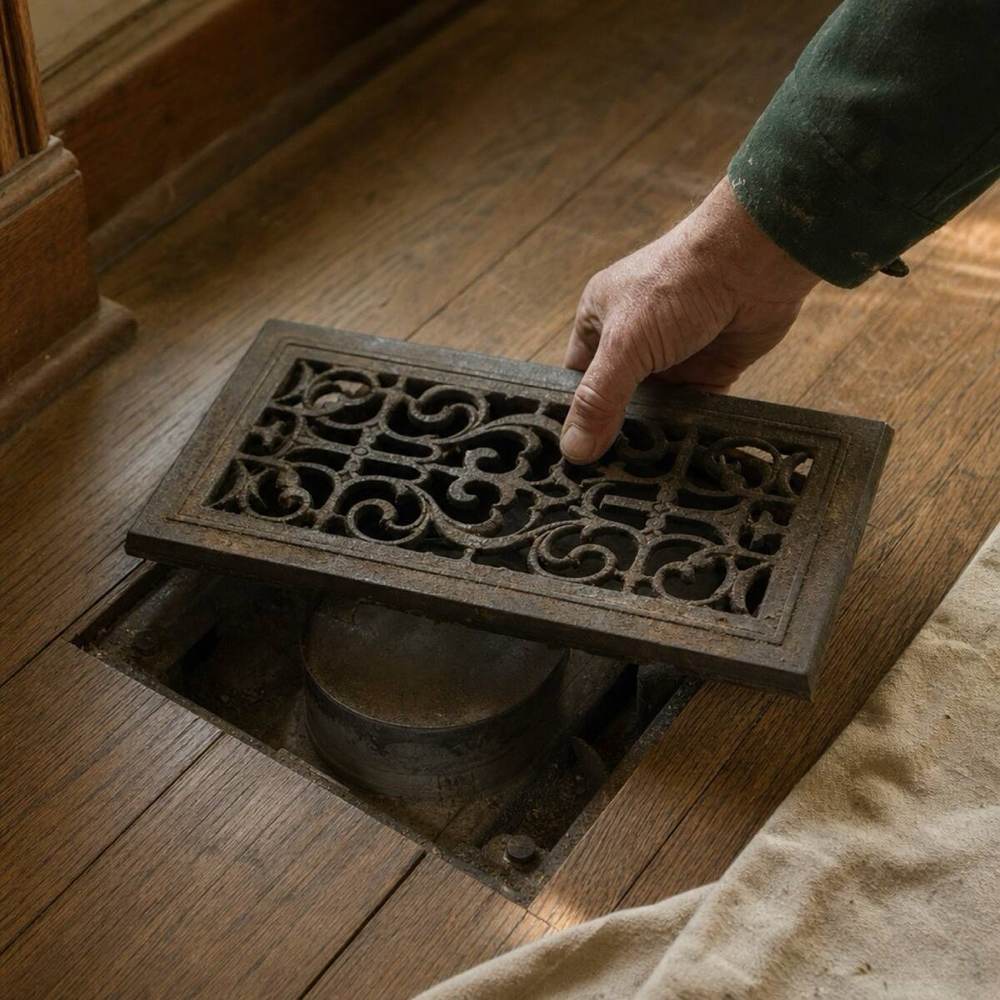
Dust and lint settle around and behind a register that has been shut for months, and the first blast of air after reopening it can stir that up. Before you reopen one, lift it out if it comes out easily, and vacuum the register and the visible opening behind it. If you see dark marks or buildup that vacuuming does not touch, our guide to dark marks around air vents explains what they usually are. If you are not sure what is inside the ducts, air duct cleaning is described on our services page, and you can tell us what you have noticed.
Related questions
Is it bad to close vents in rooms I don't use?
Closing one or two registers partway is normally fine. Closing several raises pressure in the ducts, which can push more air out of leaky joints and leave other rooms uneven.
Does closing vents save energy?
Usually not. A forced-air furnace is sized to move air through the whole duct system, so closing registers does not make it work less and can make it work harder.
Can closing vents damage my furnace?
Closing many registers raises pressure in the ducts and can make the system work harder. If you have closed several and notice noise or uneven rooms, open them and ask an HVAC contractor to look.
What should I do instead of closing vents?
Keep vents open and clear of furniture and rugs, use a programmable thermostat, and ask an HVAC contractor about zoning or balancing if one room is chronically too warm or too cold.
What should I do before reopening vents that have been closed a long time?
Vacuum the register and the visible opening behind it first, because dust collects there while it is closed.