Honest answers
Why is one room colder than the rest of the house?
Most often the room is far from the furnace, sits over a garage or on exterior walls, or gets less air because a register is closed or blocked, a damper is shut, or a duct run is crushed, disconnected, or clogged. Start with the simple checks you can do yourself, then have the ducts looked at.
What can you check yourself first?
Most cold rooms have a simple cause. Work down this list before you suspect the ducts:
- Make sure the register in the cold room is open and that nothing blocks it.
- Move furniture, curtains, and rugs that sit on or in front of the register or the return grille.
- Check the furnace filter. A clogged filter cuts the air moving through the whole system.
- Look for a damper handle on the duct branch that feeds the room, often on the basement trunk line. A handle turned crosswise to the duct usually means the damper is shut.
- If the room has a door that stays closed and no return-air path, air has nowhere to go back to the furnace. Try the room with the door open, or look for a return grille or a gap under the door.
- Look at drafty windows, thin insulation, and whether the room sits over a garage or has several exterior walls. These rooms lose heat faster no matter how much air arrives.
What can be wrong inside the ducts?
If the simple checks change nothing, the problem may be in the ductwork you cannot see. ENERGY STAR lists rooms that are difficult to heat and cool among the signs of leaky or poorly connected ducts. Common causes:
- A flexible duct run that has come loose at the trunk line or the register boot, so warm air spills into a wall or floor cavity.
- A flex run that has been crushed or kinked, often where it was squeezed past a joist or stored items.
- A long run to a bonus room or an addition, where the air arrives weak by the time it gets there.
- Debris or construction leftovers in a duct, which is more common in older homes with original ductwork.
How does a camera inspection help?
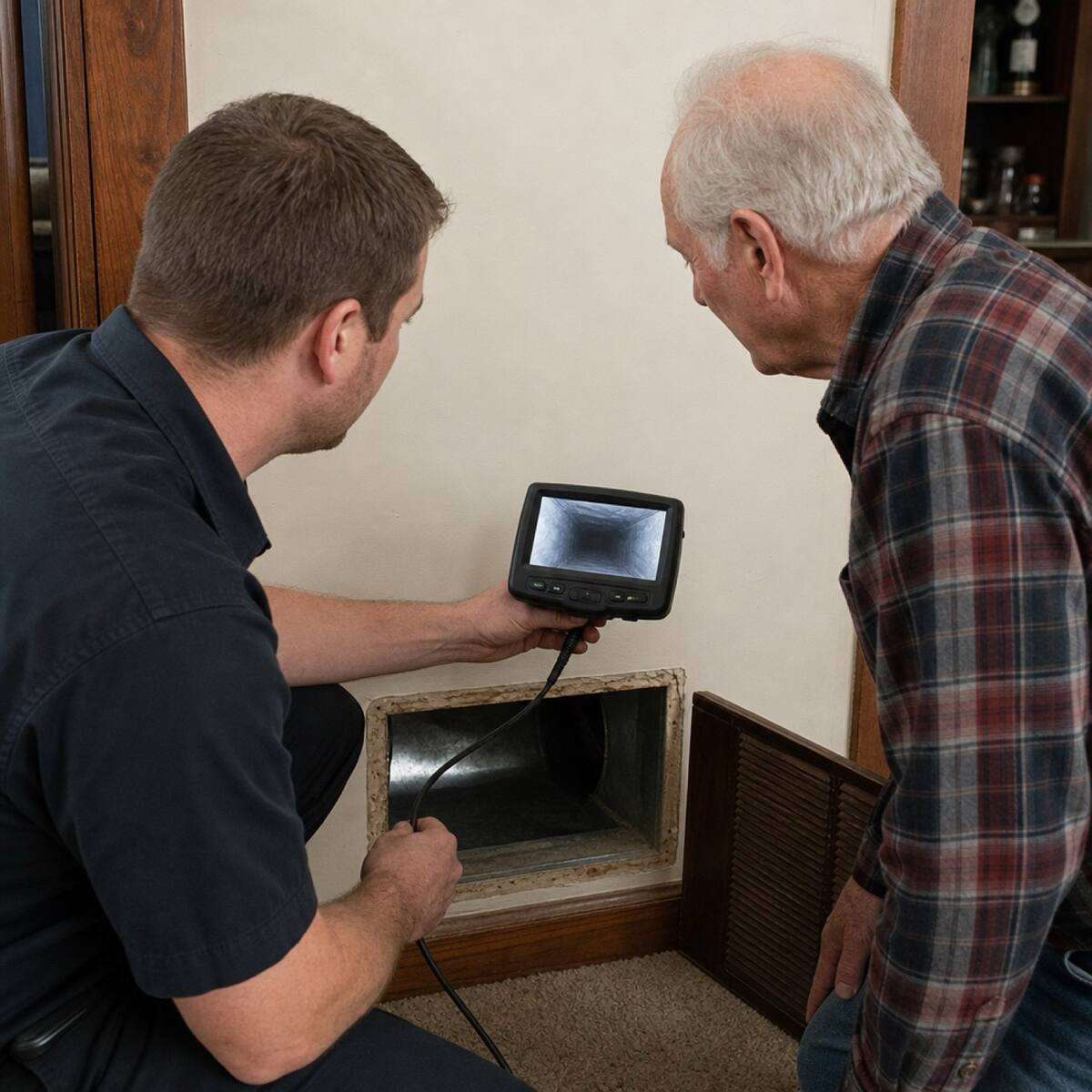
You can only guess at these from the room. A camera inspection puts a small camera into the accessible duct runs so you can see a disconnected or crushed section, or debris, instead of guessing. See camera inspections for what we do. It shows the problem; it does not repair it. Tell us what you have noticed and a real person will reply.
Who fixes the problem?
Repairing, rerouting, or rebalancing ductwork, and any furnace work, is a job for an HVAC contractor. That is not work we do. What we can do is clean the ducts and show you what is inside them, so the contractor starts with a clear picture.
Related questions
Why is one room in my house always colder?
Usually it gets less warm air than the others. The room may be far from the furnace, sit over a garage or have more exterior wall, or its register may be closed or blocked, or its duct may be restricted.
Can a closed vent make a room colder?
Yes. A closed or blocked register, or a shut damper on the duct that feeds the room, cuts the warm air reaching it. Check that the register is open and that nothing sits on top of it.
Can a camera inspection find a cold-room duct problem?
A camera inspection shows the inside of accessible duct runs, so a disconnected, crushed, or debris-filled run can be seen rather than guessed at. It shows what is there; it does not fix it.
Who fixes a crushed or disconnected duct?
Repairing, rerouting, or rebalancing ductwork, and any furnace work, is a job for an HVAC contractor. We clean ducts and look inside them with a camera; we do not do that repair work.